Can China renew an ancient idea of sustainability?
by Ken Hall on November 7, 2008 05:28 PM

China has fascinated me since my youth, and yet when the invitation came to give a speech in Beijing on Sustainability, I felt some trepidation. As the fossil-fueled economic might of China grows and its population achieves increasing affluence, our fear in the West increases – we worry about contaminated products and worker safety, a new coal plant a week and pollution drifting across the Pacific to the West Coast. We worry about escalating costs due to increasing competition for fossil fuels and industrial materials such as cement and steel. Having just returned from Beijing, I am greatly encouraged – and although we still have much to fear, that fear should be equally placed (and perhaps more so) with ourselves.

What encourages me (besides the great reception of the Chinese people themselves) is the conscious messaging of the Communist Party of China (CPC) and the very nature of this 5,000-year-old civilization. Entering Beijing, one is immediately struck by messaging to achieve a ‘Harmonious Society.’ With origins in Taoism, Confucianism and Buddhism, this messaging has evolved over the last decade from a buzzword into a paradigm. The China Business Weekly (Oct. 20-26, 2008) had a two-page spread on Energy/Environment in which they say, “(Chinese President Hu Jintao) emphasizes the establishment of a harmonious socialist society, which features democracy and the rule of law, equity and justice, honesty and fraternity, vigor and vitality, stability and order, and harmony between man and nature.”*

In addition, the CPC has implemented a key strategic initiative with the Scientific Outlook on Development that has reduced emissions of sulfur dioxide by 3.96% and chemical oxygen demand (a measure of water pollution) by 2.48% compared to the same period last year. Additionally, the Scientific Outlook for Development has contributed a national goal to China’s 11th Five Year Plan to cut energy consumption by up to 20% per unit of GDP and reduce major pollutants by up to 10% by 2010.

But what really encourages me are statements made by President Hu during his keynote address last October to the 17th National Congress. According to the China Business Weekly, “Hu said construction of an ecological civilization is one of the requirements for China to build an affluent society. Hu noted that building awareness of resource conservation and an environmentally friendly society should be a priority ahead of industrialization and modernization, starting from every department, and even every family.”

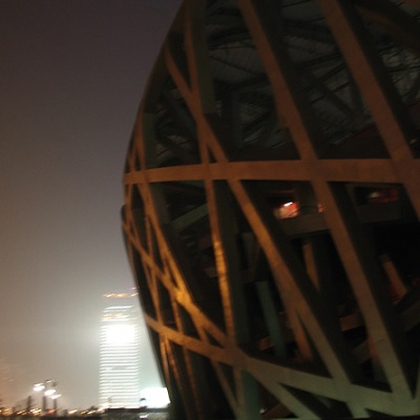
You might argue that this is simply rhetoric from politicians (although not our politicians), but I believe it is conscious messaging from the leadership of China that builds on a foundation of 5,000 years of Chinese thought about the harmonious society and harmony between man and nature. Although our current political rhetoric is about change, it might be that China is actually changing for the betterment of the whole world and we have been unable or unwilling to see it. For me personally, the notion of China creating an ecological civilization is in the bones of the Chinese people – as an architect I can see it in their ancient civilization and landscape designs. It left me with a whole new appreciation of their Olympic slogan, “One World, One Dream.”

I believe the time has come to set aside our differences about who should sign on to the Kyoto Protocol when, and recognize that we both need to de-carbonize our economies. Let’s do it together and help the whole world create an ecological civilization. One World, One Dream.

* -- Emphasis is my addition.

Image credit: Ken Hall

Comments

Cardboard, China and a company in Los Angeles

Since your fascination runs deep for China, the "Queen of Cardboard" Zhang Yin came to my mind after reading your article. If you are not familiar with Yin, she solely began collecting wastepaper in Los Angeles and shipping it to China to make the cardboard needed by growing export industries. She has made a tremendous impact in the sustainable industry. Now, I am not sure if you are at all familiar with a company in Los Angeles who is growing rapidly with its online infrastructure of providing used cardboard boxes to the average consumer and business world. UsedCardboardBoxes.com (UCB) is a company that is creating a large impact in the sustainable goods industry. The innovative concept of providing used cardboard boxes to average consumers and the business world was developed by Marty Metro. He has successful built an online infrastructure that he refers to as a "dating service for boxes." Companies with business plans such as UCB should also be recognized, and as a conscious consumer I appreciate these types of services offered for those of us who want to reduce our expenses and carbon footprints. UCB is a win/win for all of us.
Here is proof of how significant reusing a cardboard box can be:
Since the company began a few years back, UsedCardboardBoxes estimates their clients have saved:

- 6,709 trees
- 2,625,920 kWh of electricity (or 1,600 barrels of oil)
- 1,775,680 lbs CO2
- 3,485,760 gallons
- 618,560 lbs of solid waste

Post new comment

The content of this field is kept private and will not be shown publicly.
  • Web page addresses and e-mail addresses turn into links automatically.
  • Lines and paragraphs break automatically.

More information about formatting options

Top of mind

  • Technology and The Environment Sessions at the International Consumer Electronics Show hone in on some of the most important steps forward the CE industry has taken, from Energy Star advances to best practices in recycling and energy consumption. Las Vegas, Nevada, January 8-11, 2009

  •  Eco-designers are invited to submit their consumer electronics innovations for prizes and recognition at the Greener Gadget Conference, where industry luminaries meet to discuss the future of CE sustainability. Entry deadline is January 15, 2009. Conference will be held in New York, NY, February 27, 2009.

  • Americana International combines a conference program, trade show and international business matchmaking forum among environmental industries that include municipal and industrial wastewater, soil remediation and groundwater, ecoengineering, bioeconomy and life cycle analysis. Montreal, Canada, March 17-19, 2009.

  • Ethical Sourcing Forum North America 2009 spotlights sustainable business practices currently transforming global supply chains. Topics include sustainable purchasing, food, agriculture, and beverage sector, environmental measurement and monitoring and supply chain rating/reporting. New York City, March 26-27, 2009.

  • The Green Business Certification Workshop provides seminars on green marketing, developing partnerships and greening your operations. Participants receive Clean Air Green Business Certification from the Clean Air Institute. Ft. Collins, CO, January 30 – February 1, 2009.

  • The Green Travel Summit convenes a forum for corporate travel, meetings and incentive professionals, and progressive travel service providers to discuss the risks and rewards of building a sustainable travel and meetings strategy. Newport, CA, March 22, 2009.

  • The 8th International Electronics Recycling Congress offers a platform for government, business and academic participants to discuss how manufacturers can close the recycling loop. Salzburg, Austria, January 21-23, 2009.

  • 2009 Good Jobs, Green Jobs National Conference will forge an agenda for creating jobs and new technologies to reduce global warming, increase our energy independence and promote a healthful environment. This year's conference will also include a Green Jobs Expo. Washington DC, February 4, 2009.

  • Best marketing for sustainable energy will be awarded at the World Sustainable Energy Days 2009 conference, 25 – 27 February 2009, Wels/Upper Austria. Deadline for submission is 15 January 2009.

  • World Critical Resources Summit brings together 300 world leaders to facilitate solutions to sustain, expand, and protect the world's critical resources, including shelter, water, food, energy, medicine, and children. January 5th, 2009, New York.

  • A Greener Europe. The European Commission proposed a legislative package last month aimed at improving the environmental performance and energy efficiency of products and stimulating their market uptake.

  • Greener Chrysler Plant Expansion. From recycled paint sludge to replanted prairie grass, Chrysler incorporates environmentally friendly features in a Detroit plant.

  • High Tech, Low Marks. Global executives are concerned about climate change, but they aren't taking action in the supply chain that could address the issue and reduce costs, according to a McKinsey & Co report.

  • The Designer’s Field Guide to Sustainability, by our blog contributor Travis Lee, offers practical suggestions for incorporating sustainable thinking in everyday design.

  • Simplicity Saves the Day: BNN speaks with Paul Polak, founder, International Development Enterprises (IDE), a new for-profit company D-Rev, and author of Out of Poverty.

  • Carbon dioxide produced by the high-tech industry is expected to triple by 2020. Here’s how companies like Google, Cisco, HP, Sun, Intel and Microsoft are working to reduce global emissions.

  • A growing movement among designers, engineers, students and professors and architects is exploring designing and developing low-cost solutions for the 'other 90%'.

  • A new milk jug is green in almost every way – except consumers don’t like it. Here's how the manufacturer is educating consumers to change their perception.

Creative Commons License