Going down stream: a work in progress
by David Laituri on November 15, 2008 12:47 PM

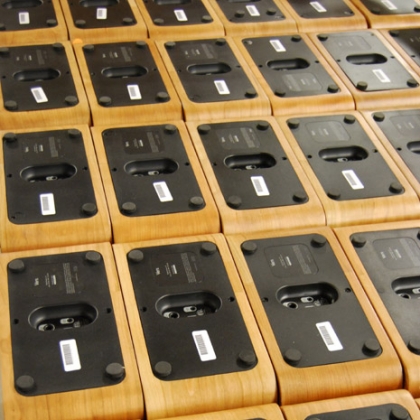
When is the right time to develop a product end of life strategy? Now, roughly – give or take a day. Even though our first product has been in-market for about a year and we shouldn’t expect to ‘need’ a product take-back/recycling program for our customers for many years to come, we believe there is plenty that can be learned by working on it now. We’re testing our prototype process with a small batch of un-recoverable, stripped carcasses from early development and customer service returns; it turns out that our systems have been surprisingly easy to repair and upgrade, leaving very few to work with in this test. It’s an important victory for our sustainability mission; many early design decisions are already paying off. While our customer service return rate is fairly low (good quality), the scrap rate from those is even lower (good sustainable design features).

We started on the design process of this program as most do: we networked with others for advice, read through whatever available material we could find, even brought in an advisor in to look over our shoulder and check our work. We chose a recycler that had the same position as we do on e-waste recycling: they promised that no recovered materials would leave the country. Our tour of their facility answered (and generated) many questions about how our inbound material would be handled, how a system would be de-manufactured and materials separated and where they would end up. So here’s the challenge: we’re still trying to get further down stream, hopefully as far as seeing new raw material be made from our scrap material. The recycler said they had no problem introducing us to their PC board, plastic and wood reclamation resources, but have they come through? Not yet. Will they? We hope so.

Our first product, the Vers 2X, has only been on the market for about a year. With an estimated lifespan of five years, it does at times feel a bit early to be taking this step at this stage of our existence. As with my earlier piece here on the value of ‘up-streaming’ (visiting your suppliers’ suppliers), we are using this down-streaming process to understand where our materials end up and to improve our future products under development. It will only work, however, if we can get access to two or more levels of the downstream value chain.

When managing the parts of the product development we don’t own – contract manufacturing up front and electronics recycling on the back end in our case, we’ve learned that it all comes down to trust and transparency; our partners establish the first when they deliver the second. Our manufacturing partners have done a solid job of taking us up-stream and we are hoping our chosen recycling partner ‘candidate’ here comes through on the down-stream side.

We have picked up a couple things from the down-stream project that we are already applying:

Handle as much as you can yourself – prep your materials, it’s the only way to assure the right materials will end up in the right place – especially the low-value ones.

Avoid turn-key solutions – do your own integration of your downstream partners – again, this will assure that the highest percentage of any particular material ends up in the place where it will most likely be recycled, not land filled or sent to another country.

Don’t believe it until you see it – ask to see where each material ends up, ask for an intro to those who take your recycler’s materials. If they set you up without question, you’ve probably found a good one. If there is any hesitation, you may want to keep looking.

Run a test project – this will help sensitize your whole team to the downstream de-manufacturing challenge, and will help improve future products and processes as well.

Comments

Post new comment

The content of this field is kept private and will not be shown publicly.
  • Web page addresses and e-mail addresses turn into links automatically.
  • Lines and paragraphs break automatically.

More information about formatting options

Top of mind

  • Technology and The Environment Sessions at the International Consumer Electronics Show hone in on some of the most important steps forward the CE industry has taken, from Energy Star advances to best practices in recycling and energy consumption. Las Vegas, Nevada, January 8-11, 2009

  •  Eco-designers are invited to submit their consumer electronics innovations for prizes and recognition at the Greener Gadget Conference, where industry luminaries meet to discuss the future of CE sustainability. Entry deadline is January 15, 2009. Conference will be held in New York, NY, February 27, 2009.

  • Americana International combines a conference program, trade show and international business matchmaking forum among environmental industries that include municipal and industrial wastewater, soil remediation and groundwater, ecoengineering, bioeconomy and life cycle analysis. Montreal, Canada, March 17-19, 2009.

  • Ethical Sourcing Forum North America 2009 spotlights sustainable business practices currently transforming global supply chains. Topics include sustainable purchasing, food, agriculture, and beverage sector, environmental measurement and monitoring and supply chain rating/reporting. New York City, March 26-27, 2009.

  • The Green Business Certification Workshop provides seminars on green marketing, developing partnerships and greening your operations. Participants receive Clean Air Green Business Certification from the Clean Air Institute. Ft. Collins, CO, January 30 – February 1, 2009.

  • The Green Travel Summit convenes a forum for corporate travel, meetings and incentive professionals, and progressive travel service providers to discuss the risks and rewards of building a sustainable travel and meetings strategy. Newport, CA, March 22, 2009.

  • The 8th International Electronics Recycling Congress offers a platform for government, business and academic participants to discuss how manufacturers can close the recycling loop. Salzburg, Austria, January 21-23, 2009.

  • 2009 Good Jobs, Green Jobs National Conference will forge an agenda for creating jobs and new technologies to reduce global warming, increase our energy independence and promote a healthful environment. This year's conference will also include a Green Jobs Expo. Washington DC, February 4, 2009.

  • Best marketing for sustainable energy will be awarded at the World Sustainable Energy Days 2009 conference, 25 – 27 February 2009, Wels/Upper Austria. Deadline for submission is 15 January 2009.

  • World Critical Resources Summit brings together 300 world leaders to facilitate solutions to sustain, expand, and protect the world's critical resources, including shelter, water, food, energy, medicine, and children. January 5th, 2009, New York.

  • A Greener Europe. The European Commission proposed a legislative package last month aimed at improving the environmental performance and energy efficiency of products and stimulating their market uptake.

  • Greener Chrysler Plant Expansion. From recycled paint sludge to replanted prairie grass, Chrysler incorporates environmentally friendly features in a Detroit plant.

  • High Tech, Low Marks. Global executives are concerned about climate change, but they aren't taking action in the supply chain that could address the issue and reduce costs, according to a McKinsey & Co report.

  • The Designer’s Field Guide to Sustainability, by our blog contributor Travis Lee, offers practical suggestions for incorporating sustainable thinking in everyday design.

  • Simplicity Saves the Day: BNN speaks with Paul Polak, founder, International Development Enterprises (IDE), a new for-profit company D-Rev, and author of Out of Poverty.

  • Carbon dioxide produced by the high-tech industry is expected to triple by 2020. Here’s how companies like Google, Cisco, HP, Sun, Intel and Microsoft are working to reduce global emissions.

  • A growing movement among designers, engineers, students and professors and architects is exploring designing and developing low-cost solutions for the 'other 90%'.

  • A new milk jug is green in almost every way – except consumers don’t like it. Here's how the manufacturer is educating consumers to change their perception.

Creative Commons License