Software & systems

 When organizations want to improve their triple bottom line1 they usually start with the internal processes. It seems to fit the direct-responsibility focus that makes good managers most successful. Internal processes are within reach, and most easily grasped. Looking at it from a life cycle perspective, the indirect responsibility usually comes later, if at all. However, for some sustainable design solutions the critical area lies in the indirect upstream responsibility.
Red, blue and green all over: the politics of sustainability
 I’m not one of those people who can say that I’ve always cared about sustainability. My turning point came about four years ago when I toured a landfill and personally saw the obscene amount of waste that society creates each and every day. Somehow I knew intuitively that what I witnessed wasn’t sustainable. I deduced that every paper cup, plastic container, broken glass, diaper and appliance that was being buried embodied natural resources – wasted resources – that were going right into the ground.
Certifications & labeling, Designers, Electronics, Green Economy, Life cycle assessment, Manufacturing, Marketing, Materials & processes, Packaging, Product service systems, Products, Software & systems, Standards & regulations, Strategies, Supply chain, Sustainability paradox, Sustainable Europe, Sustainable interaction design, Teamwork
Sustainable Minds whitepaper primer on greener product design is now available!

Certifications & labeling, Designers, Electronics, Green Economy, Life cycle assessment, Manufacturing, Marketing, Materials & processes, Packaging, Product service systems, Products, Software & systems, Standards & regulations, Strategies, Supply chain, Sustainability paradox, Sustainable Europe, Sustainable interaction design, Teamwork
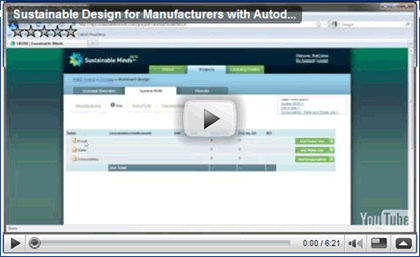
Autodesk's Rob Cohee previews Sustainable Minds LCA software
Certifications & labeling, Designers, Electronics, Green Economy, Life cycle assessment, Manufacturing, Marketing, Materials & processes, Packaging, Product service systems, Products, Software & systems, Standards & regulations, Strategies, Supply chain, Sustainability paradox, Sustainable Europe, Sustainable interaction design, Teamwork

Sustainable Minds Makes Life Cycle Analysis Easy
 This post by guest contributor Steve Puma, a sustainability and personal technology consultant, first appeared on
Certifications & labeling, Designers, Electronics, Green Economy, Life cycle assessment, Manufacturing, Marketing, Materials & processes, Packaging, Product service systems, Products, Software & systems, Standards & regulations, Strategies, Supply chain, Sustainability paradox, Sustainable Europe, Sustainable interaction design, Teamwork